How to Plan Food for Travel with Dietary Restrictions
A hotel breakfast or that little lobby market pantry might not have anything that works for your specific diet. Depending on where you’re headed, finding a restaurant with safe options can take far more effort than you ever expected.
Fortunately, traveling with dietary restrictions doesn’t mean you have to worry constantly or plan out every single second.
A little intentional preparation before you leave home will give you dependable options, lower your food stress, and ensure you always have safe, affordable meals ready to go on your journey.
Why This Earns a Spot in the Suitcase
When you have dietary restrictions, you don’t always have the luxury of choosing food based on what’s available when you get hungry.
Planning ahead gives you the backup you need when your options are limited.
What This Saves You
Traveling with a special diet can lead to convenience spending when you have to buy food simply because you don’t have another choice.
You want to avoid finding yourself hungry, with limited options, and willing to pay whatevery it takes to find something you can eat.
Dietrary Food Restrictions Roadmap

Start by thinking about your trip, not just your diet.
- How long will you be traveling?
- Where will you be staying?
- Will you have a refrigerator?
- Will you have access to a microwave or kitchen?
- Will you have a cooler?
- How easy will it be to find foods that work for?
- Which meals will be the hardest to manage?
- What foods can be safely prepared before I leave?
- What should I bring as a backup?
Start with the meals and situations where your options will be the most limited.
Identify your “must-have” foods.
Before you leave, make a list of the foods you know you can rely on.
These might include:
- Breakfast staples
- Favorite snacks
- Bread or wraps
- Protein sources
- Shelf-stable foods
- Specialty items that may be difficult to find
- Emergency foods for travel delays
Decide what to prep before you leave.
This is where planning can make the biggest difference.
Depending on your restrictions and the type of trip, you might plan ahead items like these:
- Fruits
- Snack packs
- Frozen meals
- Cooked proteins
- Portion-sized snacks
- Store bought yogurts and granola bars
Focus on the foods that are difficult to find, expensive to replace, or important to have when you’re short on options.
Create a travel food back up plan.
Even the best travel plans can change. Flights can be delayed, grocery stores might not have what you expect, and even dinner plans can fall apart.
Have a few shelf-stable or easy-to-carry foods available for those type situations.
Your backup food doesn’t need to replace a meal, it just needs to give you an option when your first plan falls apart.
Pack for the first 24 hours.
One of the easiest ways to reduce stress is to make sure you have food for your first day.
If you’re arriving late, you may not want to search for a grocery store.
If you’re staying somewhere unfamiliar, you may not know where to find suitable foods.
Consider packing enough food to cover:
- Travel day snacks
- Your arrival
- Breakfast the next morning
- One backup meal or snack
Once you’re settled, you can figure out where to shop and what food options are available locally.
Will Travel Tip
Don’t assume you’ll find your usual foods when you arrive.
If there’s something you rely on regularly, check ahead of time to see whether it’s available at your destination. If it’s difficult to find or significantly more expensive, bring enough to get you through the first part of your trip.
Plan Your First Grocery Run
If you’ll be staying somewhere with a kitchen or refrigerator, decide ahead of time what you’ll buy once you arrive.
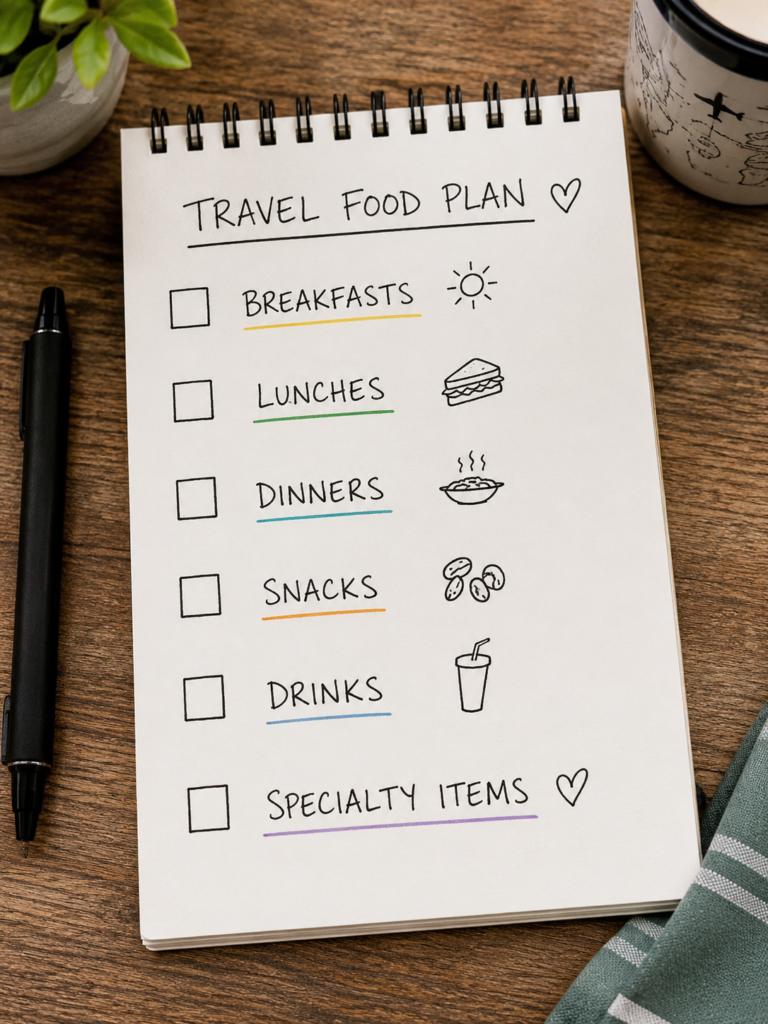
Categorizing will help you stay organized.
If possible, research grocery stores near your destination before you leave. This will help you avoid arriving tired and hungry with no idea where to shop.
Match Your Traveling with Dietary Restrictions Plan to Your Accomodations
Your food plan should match the space and equipment available.
Hotel room
Focus on foods that don’t require cooking.
Hotel with refrigerator and microwave
You have more options for make-ahead foods and leftovers.
Vacation rental
You can plan more complete meals and cook with the equipment available.
Road trip
You can bring a cooler and prepare more food ahead of time.
Camping
Shelf-stable foods and foods that can be prepared with limited equipment may work best.
The same diet can require a completely different food strategy depending on where you’re staying.
Don’t forget about cross-contact
For people with allergies or medical dietary restrictions, food planning may involve more than simply avoiding certain ingredients.
Be sure to consider:
- Food labels
- Restaurant preparation practices
- Shared cooking surfaces
- Shared utensils
- Cross-contact risks
If you plan on eating out, research restaurants and accommodations ahead of time and communicate your needs clearly.
If your restriction is medically necessary, follow the guidance provided by your healthcare professional.
Why Smart Travelers Do This
Smart travelers with any kind of dietary restriction plan ahead to create enough certainty to relax and enjoy their trip.
Before You Hit The Road
Before leaving, make sure you know:
- What foods you’ll need during transit
- What you’ll eat during your first 24 hours
- What foods you’ll prepare ahead
- What you’ll pack from home
- What you’ll buy after arriving
- Where you’ll shop
- Which restaurants or food options may work
- What backup foods you’ll have if plans change
A little planning before you leave can make traveling with your food restrictions feel much more manageable, and give you more freedom to enjoy the trip once you’re there.