
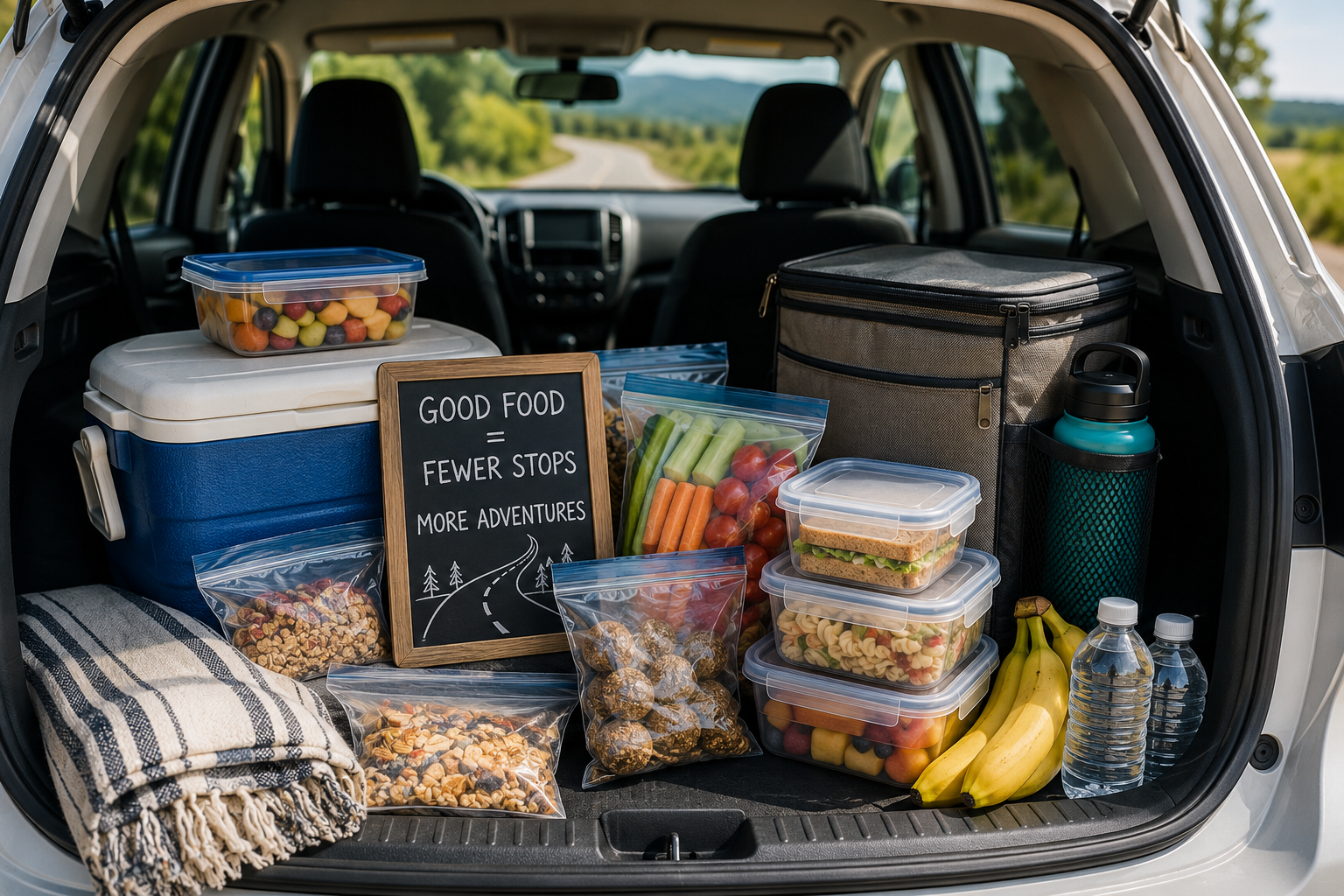
The Best Road Trip Foods to Prep & Pack Ahead
Road trip pit stops are part of the adventure, but the cost of food and drinks along the way can start adding up before you’ve heard your first “Are we there yet?” A drink here, a bag of snacks there, or pre-packaged sandwiches for everyone in the car can easily turn into more spending than you planned.
This guide covers the best road trip foods to pack ahead of time – including snacks, lunches, and simple options that travel well – so you can spend less along the way without feeling like you’re missing out.
Why this Earns a Spot in the Car
Long stretches of driving create a lot of opportunities to spend more money than you want. Hunger hits, everyone wants something different, and suddenly a quick stop turns into a bag full of items you didn’t plan to buy. Sound familiar?
Packing a few main food items and snacks ahead of time gives you options when you need them, without the extra spending or stress of figuring it out along the way.
What this Saves You
Road trip food spending happens one stop at a time.
It might be:
- Gas station snacks
- Convenience store drinks
- Rest stop purchases
- Fast food add-ons
For a family of four, one stop could look like this:
- Drinks: $8–$15
- Snacks: $10–$25
- Convenience items: $5–$15
That means a single stop can add $25–$50 or more to your travel day.
Road Trip Food Roadmap
Answer these 3 navigation questions to outline your travel meal timeline:
- The Travel Time: How many total hours will we be on the highway?
- The Cooler Access: Is the main cooler buried in the trunk, or do we have a separate small cooler box within arm’s reach of the passenger seat?
- The In-Transit Headcount: Are we feeding the driver safely while moving, or are these meals strictly for designated rest stop pull-overs?
A great road trip menu requires a timeline. Break your cooking prep down by these phases before you back out of the driveway:
- ➔ Phase 1: The Freezer Block (Days Before): Freeze juice boxes, water bottles, and marinate meals. They double as structural ice blocks inside your main cooler container!
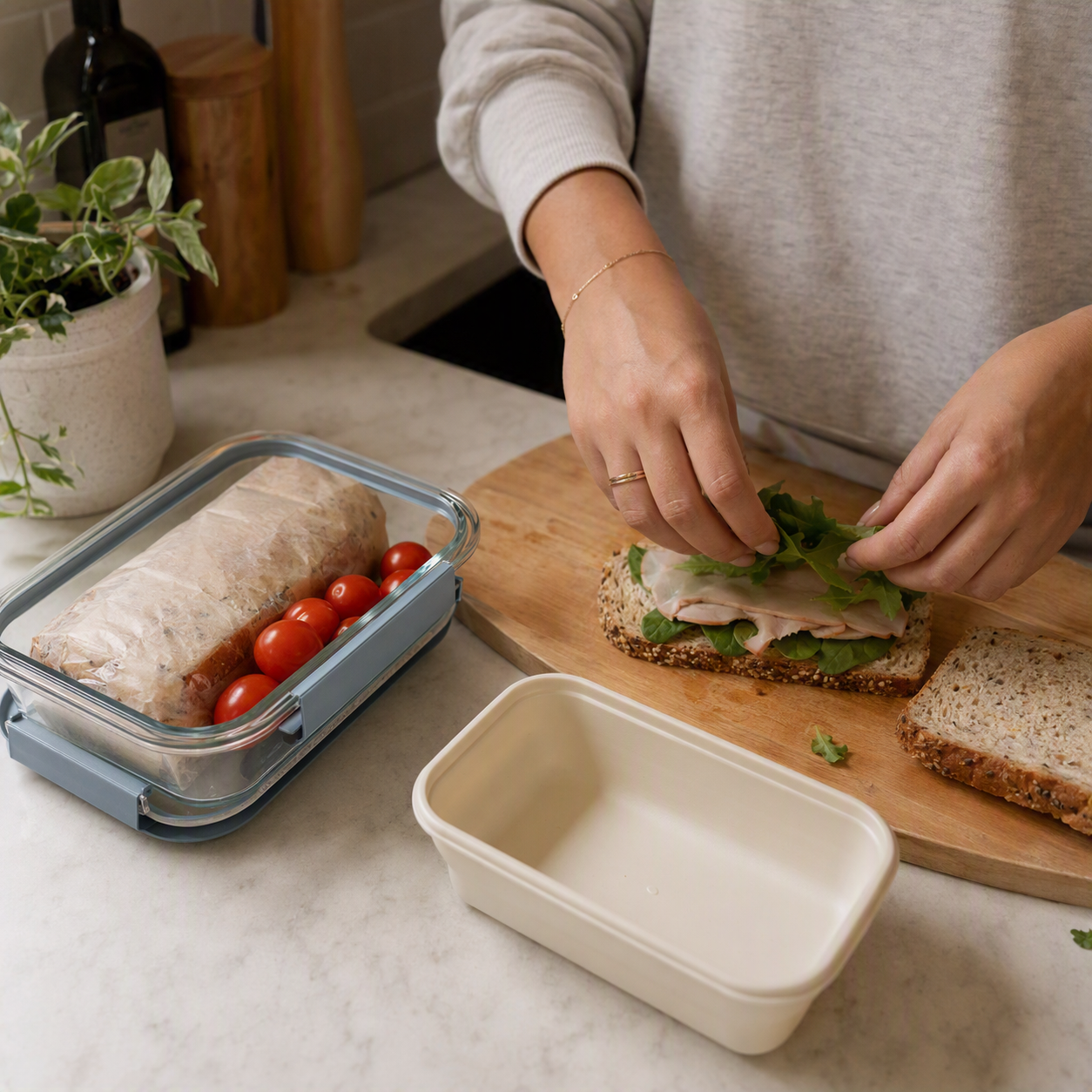
- ➔ Phase 2: The Portion Chop (Night Before): Chop veggies, slice cheese slices, and pre-portion individual snack baggies so the driver doesn’t have to fumble with giant family-sized boxes while driving.
Pack your storage layers inside your car cooler following this exact structural route map to prevent food from getting soggy:
- The Foundation: Place your heavy raw meats, frozen bottles, and ice blocks at the absolute bottom.
- The Mid-Tier: Layer your tightly sealed sandwich boxes, wraps, and main meals in the center row.
- The Canopy: Keep delicate items like fresh fruit bags, loose snacks, and paper napkins at the very top, safely away from any pooling meltwater.
Road Trip Foods Worth Packing
Eating on the road is part of the journey. Sometimes it’s just because there is nothing else to do, and that’s okay when you’re prepared for it! Here’s some great ideas for when boredom, or, legitimate hunger sets in:
Snacks
- Popcorn
- Chex Mix
- Chocolate Chip Muffins
- Bananas, Apples, Oranges
- Roasted Pumpkin Seeds
Make sure snacks are portioned for a quick grab.
Prep-Ahead Breakfast for a cooler
Prep-Ahead Lunches for a cooler
- Turkey Pinwheels
- Veggie Sandwiches
- Assorted veggies with hummus or ranch
Drinks and Hydration
- Frozen water bottles
- Water bottles
- Electrolyte packets
- Juice boxes
These are easy ideas that you can pull together quickly before you leave.
Will Travel Tip
Pack for the stops you don’t want to make. If you know everyone will want a drink, snack, or a quick bite a few hours into the drive, have it ready before you leave.
Why Smart Travelers Do This
Smart travelers know that the easiest way to avoid expensive convenience purchases is eliminate the need to buy food at every pit stop.
When snacks, drinks, and a simple meal are already packed, every stop becomes a choice instead of an expense. That means you can stop because you want to stretch your legs, enjoy the scenery, or fill the gas tank, not because everyone is hungry.
Before you Hit the Road
Before you leave, make sure the food you’ve prepared is packed for the way you’ll actually travel.
- Keep snacks where everyone can reach them.
- Pack lunches and breakfast items together so they’re easy to find.
- Make sure everyone has their refillable water bottles and extra drinks are in the cooler within easy reach.
- Pack napkins, wipes, and a small trash bag.
- Make sure you have enough food for the hours you’ll be on the road.
When someone gets hungry, the food you’ve already packed should be easier to reach than the nearest convenience store.
FAQs: Best Road Trip Foods to Pack & Prep
No. While a cooler gives you more meal options, plenty of road trip foods don’t require refrigeration. Popcorn, nuts, crackers, muffins, dried fruit, apples, oranges, peanut butter sandwiches, and individual snack packs all travel well without one. A cooler simply expands your choices by allowing you to bring sandwiches, wraps, cheese, yogurt, and other perishable foods.
A good rule is to pack at least one snack per person every three to four hours of driving, plus a few extras in case of traffic delays or unexpected detours. Families traveling with children often find it helpful to portion snacks ahead of time so they’re easy to grab without opening large bags throughout the trip.
Many travelers pack plenty of food but make it difficult to reach. Keep snacks within easy reach, group breakfast and lunch items together, and place drinks where someone can grab them without unpacking the entire vehicle. The easier your food is to access, the more likely you’ll eat what you packed instead of buying something at the next stop.
Not necessarily. Packing every meal isn’t the goal. Instead, focus on the meals and snacks that will save you the most money and fit your travel schedule. Many travelers pack breakfast, lunch, snacks, and drinks while leaving room for one restaurant meal along the way. That balance provides flexibility while still reducing unnecessary spending.