The Complete Guide to Planning Food for Travel
Every trip comes with dozens of food decisions. Where should we stop for breakfast? Should we grab snacks now or later? Do we order takeout tonight? Is there enough food for tomorrow’s hike? Do we need groceries when we arrive?
Those decisions often happen when you’re tired, hungry, or unfamiliar with the area…and that’s when convenience usually wins.
Will Travel With Food is here to simplify meal planning for a trip. By organizing ahead, you can eat well, and enjoy your trip with fewer last-minute decisions.
Why Planning Works
When you already know what you’ll eat, what you’ve packed, and what you’ll pick up after you arrive, you’re free to spend less time thinking about food and more time enjoying your destination.
A simple plan helps you:
- Avoid unnecessary restaurant meals
- Reduce impulse purchases
- Waste less food
- Make better use of leftovers
- Spend more of your travel budget on the experiences you came for
Planning isn’t about making every decision ahead of time. It’s about making the important ones before you’re hungry.
What This Saves You
Without a travel food plan, it’s easy to overspend through a series of small decisions:
- Coffee stops
- Convenience store snacks
- Hotel lobby markets
- Last-minute grocery runs
- Restaurant meals because nothing was planned
Individually, those purchases may not seem significant.
Together, they can easily add $100–$300 or more to a vacation budget.
Planning ahead helps eliminate many of those unnecessary expenses while making every travel day easier and less stressful.
Start Here
1. Plan before you shop.
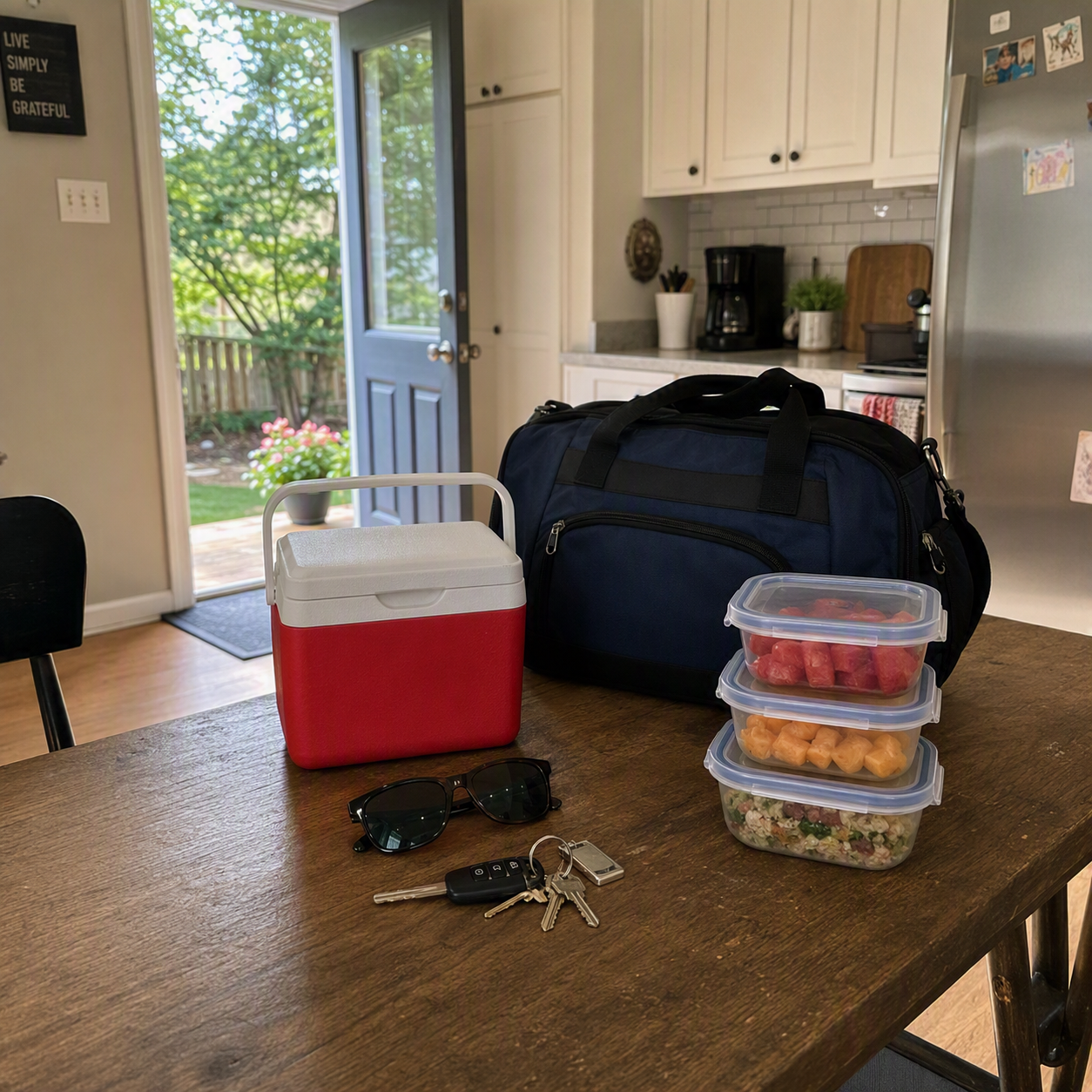
A successful travel food plan starts before you ever walk into the grocery store. Think about where you’re staying, how many meals you’ll need, how many people, cooler space, and planned activities.
2. Choose meals that fit your trip.
Choosing meals that match your destination, schedule, and available equipment makes eating easier and can eliminate dozens of restaurant decisions during a trip.
A hotel stay, vacation rental, camping trip, or day hike will each call for a different approach. The key is choosing food that fits the way you’ll actually spend your time.
3. Create a snack set up.
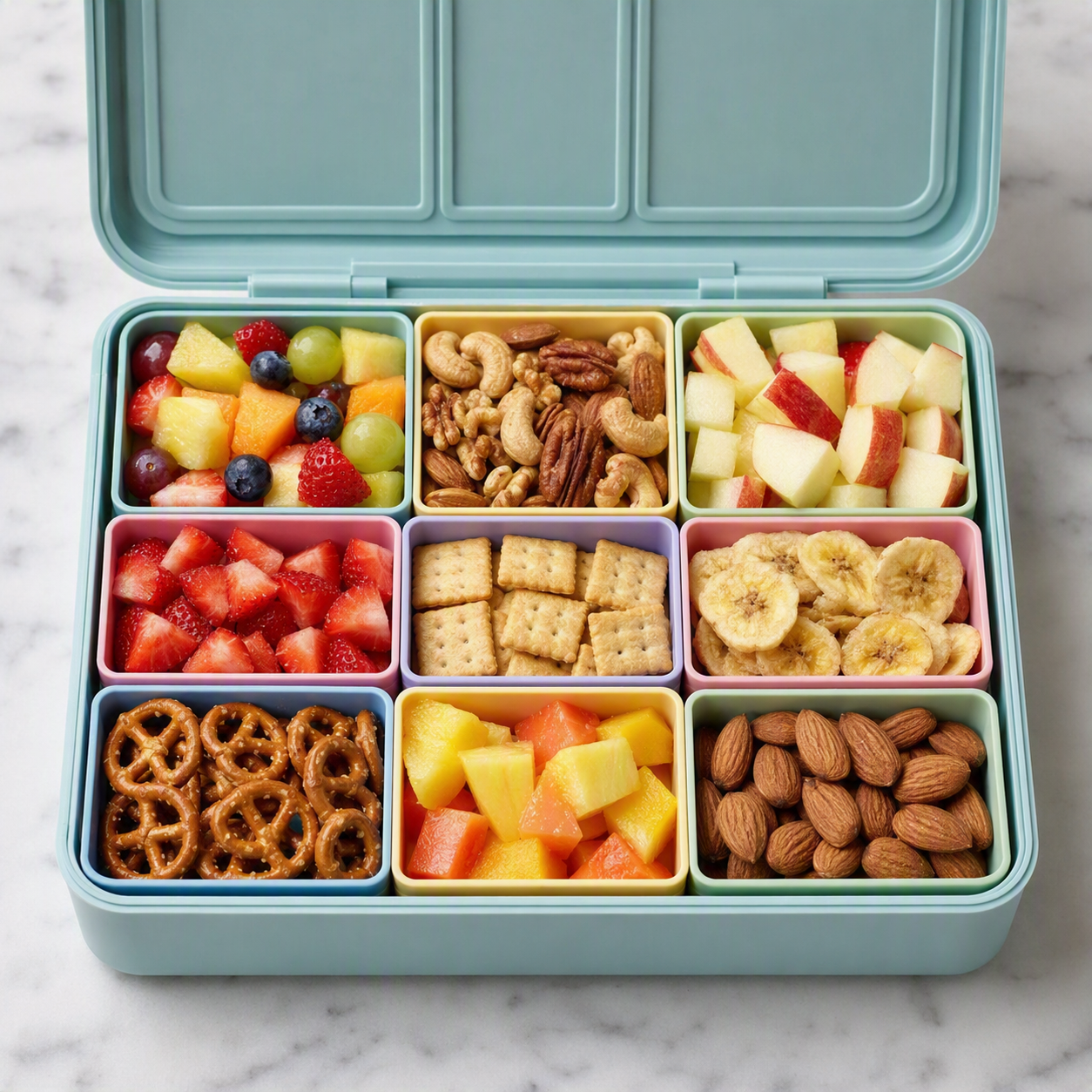
Snacks create some of the biggest hidden travel expenses.
Instead of buying snacks throughout your trip:
- portion them
- prepare snack packs
- organize by day or activity
4. Match food to the trip/activity.
Every trip is different. The foods that work for a camping trip aren’t always the best choice for a hotel stay or a day at the beach.
- Kids day trips
- Vacation rental stays
- Hotel meals
- Camping
- Picnics
- Hiking
5. Match food to your equipment
The equipment you have on site often determines the meals that make the most sense. Choose foods that are going to work with what you’ll actually have access to.
Consider how these common setups shape your options:
- Slow cooker
- Grill
- Refrigerator + microwave
- Full kitchen
- No kitchen
A slow cooker opens up different possibilities than a grill. A hotel room with a refrigerator and microwave requires a different approach than a vacation rental with a full kitchen.
Why Smart Travelers Do This
Smart travelers know that a little planning before they leave creates a much more relaxing trip.
Instead of making food decisions all day long, they already have a plan for meals, snacks, and groceries. That means less stress, fewer impulse purchases, and more time enjoying the reason they traveled in the first place.
Before You Hit the Road
You don’t have to change the way you travel overnight.
Start with one area that fits your next trip. Maybe it’s planning your groceries, creating a snack setup, or prepping a few meals ahead of time.
Once you’ve done that, add another strategy to your next trip.
Before long, planning your travel food will become just as routine as packing your suitcase.
Next Stop: